
Art Lort
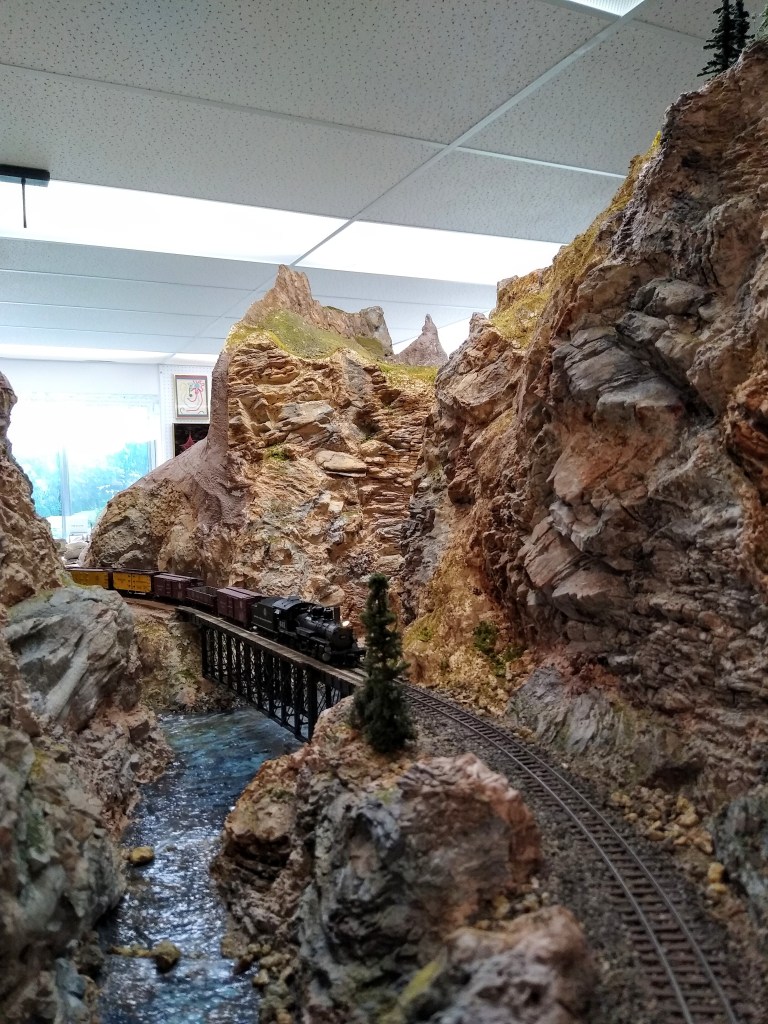
My layout is based on the D&RGW Gunnison Division in 1928. It’s constructed in about 1,500 square feet of basement space and has been in process since October of 1997.
One feature of the railroad is the dual gauge division yard at Salida with transfer facilities and locomotive servicing facilities. The standard gauge mainline runs from Salida to east and west staging yards with some route switching included in the eastbound trip.
Leaving Salida, the narrow gauge proceeds to Mears Junction where the Alamosa branch leaves the mainline. The mainline track continues the climb over Marshall Pass and descends the west slope to Gunnison. There are several route switching points along the way.
Leaving Gunnison, the narrow gauge route traverses the Black Canyon, the town of Cimarron, ducks out of sight under Gunnison yard, and emerges at Montrose. Montrose consists of a five track staging yard leading into a hidden reversing loop.
I use a North Coast Engineering radio DCC system. I can accommodate up to ten operators. Salida requires two operators; Gunnison requires one. The remaining operators handle through trains and locals on either the standard gauge or narrow gauge. It’s fun! Come join us for an op session or the open house!
Doug Gieger
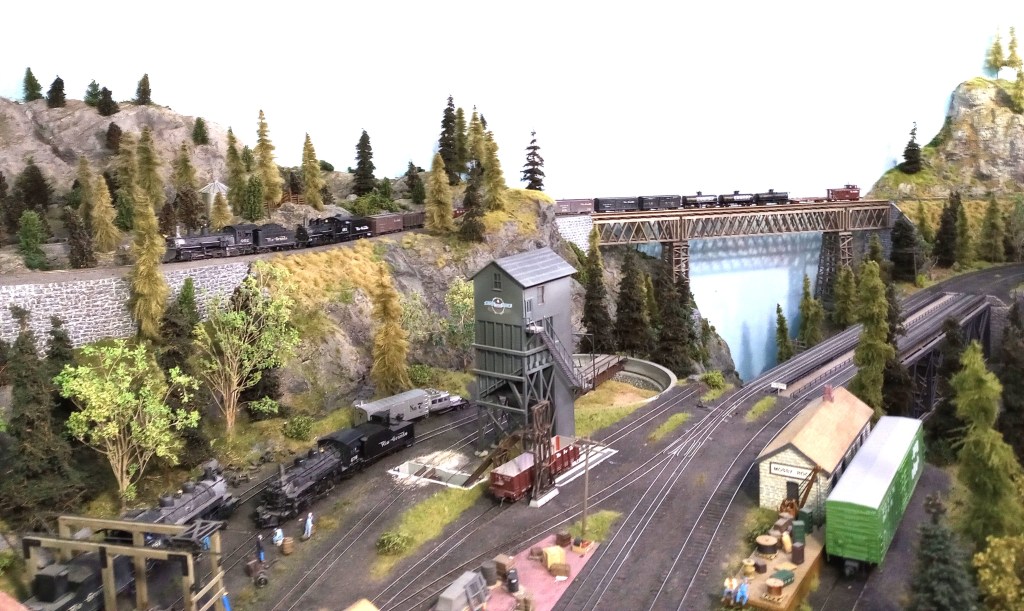
The HO/HOn3 Granite Mountain Railway (GMRy) is a modern, bridge-route
railroad that connects mid-America to the west coast. Four prototype railroads (BN, ATSF, DRGW, and the MILW) have trackage on the layout and interchange with each other and the GMRy. There is also a wholly-owned subsidiary railroad, the narrow-gauge Granite Mountain & Pacific. Although the layout is totally freelanced, it is set in 1988 and draws heavily on prototype mountain railroads. The Pacific Steel division of United States Steel occupies a large part of the layout. Twelve operators are required during monthly operating sessions. The layout occupies a basement space of 23×43 feet, with additional trackage in the garage. The 550-foot mainline is completely signaled using position and searchlight signals and an authentic ATSF-style ctc machine in an isolated dispatcher’s office. Four staging yards simulate off-layout destinations. Additionally, five helixes connect the double-deck (and sometimes triple-deck) levels. The layout uses wireless simplex Digitrax command control. Car cards are used for traffic movements. Crew communication uses FRS radios. The layout has been featured in the Great Model Railroad video series #8, in RMC February, April and July 1991 and in the July 1995 issue of Model Railroading magazine.
Jeff Stroup
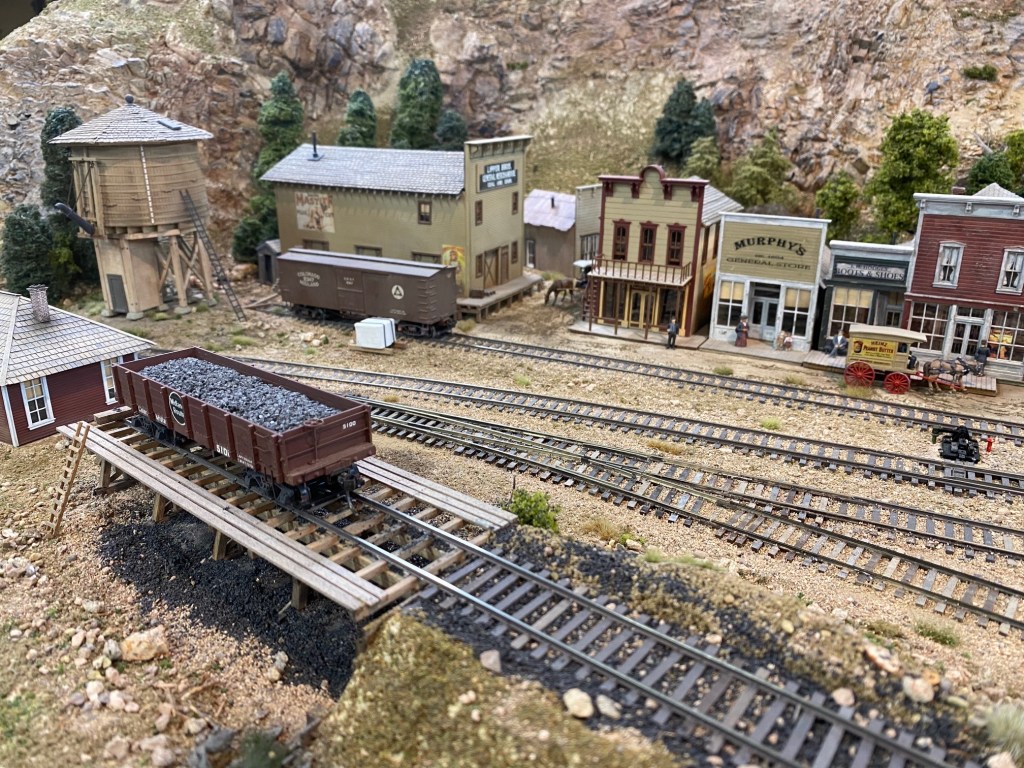
It’s a turn-of-the-century (1895-1901) steam HO standard gauge layout (16’x25′) representing the Colorado Midland Railway second division: Leadville – Basalt – Cardiff, etc. Operations feature short trains with a max of 4-6 cars. Car routing utilize TT&TO with Form19’s for extras. In addition, JMRI generated switch lists are placed at each town to emulate local station agents. Operators have the option to create and disengage steam double-headers if they wish.
We run two(2) simultaneous trains using two 2 person crews operating as engineer and conductor pairs. Therefore, need 4 operators total.
In addition to the NCE wireless DCC system, Cell phone “throttles” (WiThrottle and Engine Driver) are enabled too.
 2026 Sn3 Symposium