
Layout Operating Sessions – Wednesday Evening April 22nd, 2026
Operating Sessions are Full as of March 1st 2026
For those who have expressed an interest in the Wed night op sessions, we will use the same procedure that last year’s symposium utilized. Why fix what isn’t broken! We will keep track of your registration order and jobs will be assigned accordingly. A notice will be emailed once you are assigned, you will again be emailed the particulars of the assignment and location. All the operating sessions are full, thanks for signing up. We will be sending assignments shortly.
Layout Tours
North Layouts
Mike Trent – On3 – Colorado & Southern
As a working diorama depicting Dickey, CO was a junction on the C&S Mainline connecting the Keystone Branch through Dillon to the mainline between Como and Leadville. The site is now under Dillon Reservoir. The layout features a large, accurate Locomotive Roster, freight and passenger rolling stock, Rotary Snowplow, and Flanger. Several are award winning models, including 537, #74, #75, #76 and Rotary #99200. The layout also features structures of several notable builders, Todd Hackett, Joe Crea, Bill White, and Bob Stull. Included are the 12 pocket Dickey Coal Dock, Engine house, and Station. Several C&S artifacts are available to see as well as some other models on display.

Jim Eaman – Sn3 – Colorado & Northwestern
The Colorado and Northwestern Railway (C&N) was built to serve the mines, mills and people of western Boulder County. The C&N was nicknamed the “The Switzerland Trail of America” and had sharp curves, steep grades and lots of history which make it an ideal prototype to model. Jim is attempting to recreate C&N in its entirety as it existed in 1908 with the intention to model most every station, all major features, every locomotive, every piece of rolling stock and every passenger car. Prototypical operation is planned.

Ron Keiser – Fn3 or 1:20.3 – Silverton Branch
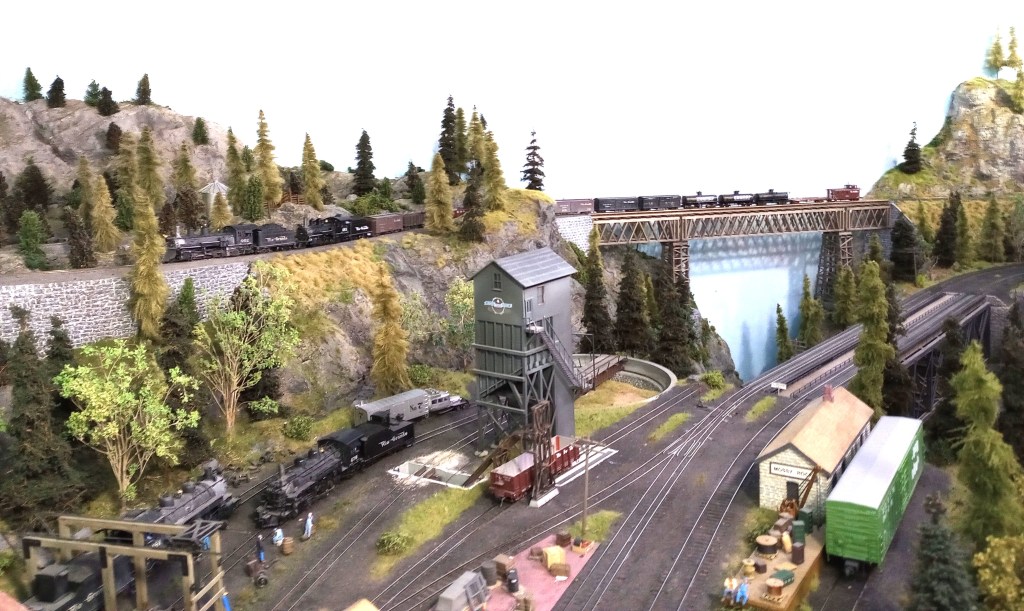
Ron has built an impressive model railroad layout in Fn3 or 1:20.3 called the Cascade and Silverton. It’s in his basement because he doesn’t have a garden. The layout shows a part of the Silverton branch of the D&RGW. Cascade was a construction camp where they cut ties for the railroad in 1880. Ron rebuilt the town of Cascade as the basis for his model railroad. The trains and cars he used are accurate for the Rio Grande and the RGS, even though the RGS didn’t actually run on this branch. He chose them so they could run on his model railroad. The layout is complete and looks great. It has over 100 trees and 130 small figures of people. Ron used locomotives from Accucraft and Bachmann Spectrum, as well as rolling stock from Berlyn and Phils Narrow Gauge. The equipment is slightly weathered to make it look more realistic, but not too much because it represents the year 1942 when most of the real trains were in good condition. The room is lit up with dimmable LEDs, and there’s also some blue night lighting for a cool effect. If you search for “Cascade and Silverton” on YouTube, you can find a terrific video of the layout.

Jim Gray – HOn3 – D&RGW
This D&RGW railroad is not a historical re-creation of any actual location. The goal was to simply create the feeling of high mountain isolation somewhere in Colorado, and sometime in the fall of the late 1930’s or early ’40’s. This is not a railroad designed for complex operations. The layout provides an impression of a single lonely track, with narrow gauge steam locomotives struggling up through the forbidding rocky cliffs, passing worn and weathered towns, mines and mills, all perched in narrow gaps or on steep slopes. This layout has been published in both the Narrow Gauge & Short Line Gazette and the HOn3 Annual.

Gary Young and Joe Crea On30 – The Big “O” Railroad
The Big “O” Railroad is a retirement community-based layout created by model railroad enthusiasts with a variety of skills. It’s a general plywood tabletop model railroad with a very special feature. Joe Crea has made over 250 different “paper” buildings. These buildings are made from empty cereal boxes using Evans Designs software that provides an impressive 3D effect. Joe is going to give a guided tour of the layout and share tips and tricks on how to build cereal box buildings. The best part is, after your tour, you will be collecting empty Fruit Loops cereal boxes for your model railroad!
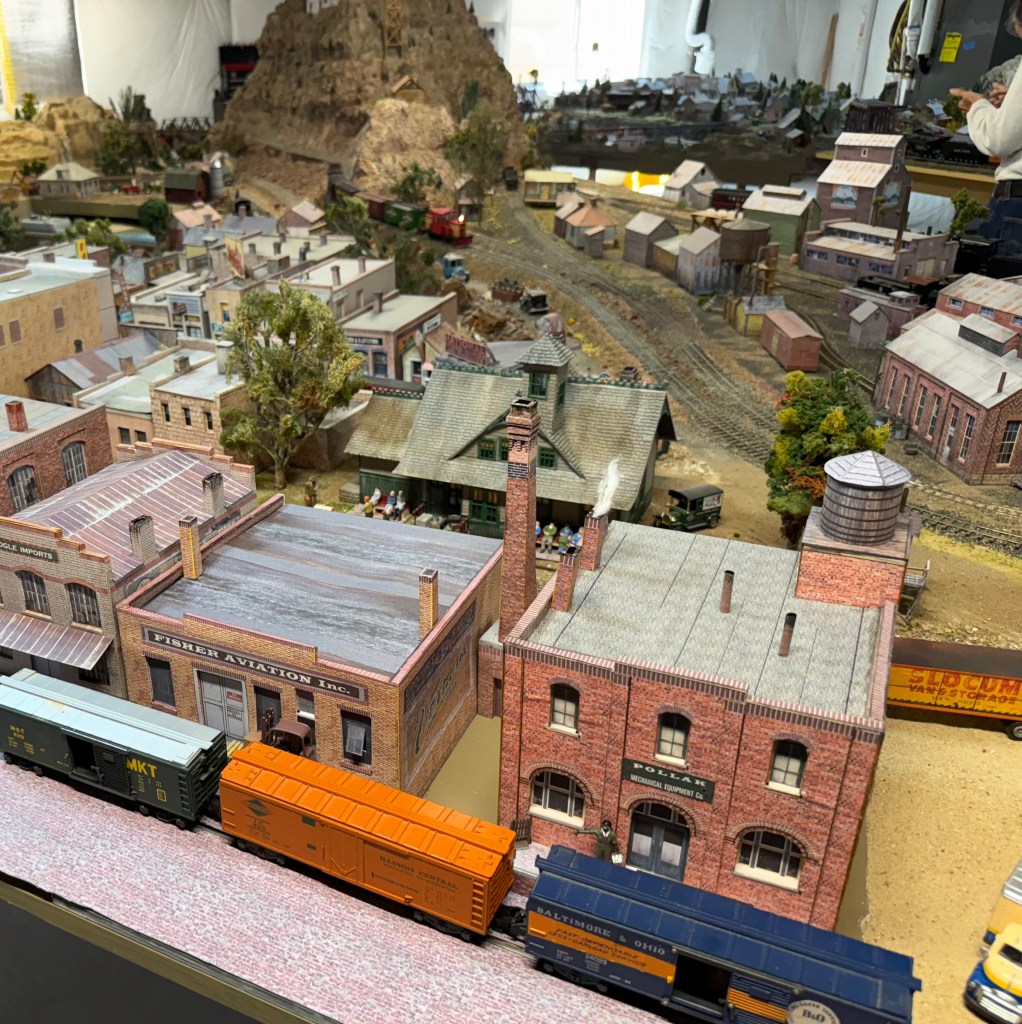
Doug Geiger – HOn3 – Granite Mountain Railway
The HO/HOn3 Granite Mountain Railway (GMRy) is a modern, bridge-route
railroad that connects mid-America to the west coast. Four prototype railroads (BN, ATSF, DRGW, and the MILW) have trackage on the layout and interchange with each other and the GMRy. There is also a wholly-owned subsidiary railroad, the narrow-gauge Granite Mountain & Pacific. Although the layout is totally freelanced, it is set in 1988 and draws heavily on prototype mountain railroads. The Pacific Steel division of United States Steel occupies a large part of the layout. Twelve operators are required during monthly operating sessions. The layout occupies a basement space of 23×43 feet, with additional trackage in the garage. The 550-foot mainline is completely signaled using position and searchlight signals and an authentic ATSF-style ctc machine in an isolated dispatcher’s office. Four staging yards simulate off-layout destinations. Additionally, five helixes connect the double-deck (and sometimes triple-deck) levels. The layout uses wireless simplex Digitrax command control. Car cards are used for traffic movements. Crew communication uses FRS radios. The layout has been featured in the Great Model Railroad video series #8, in RMC February, April and July 1991 and in the July 1995 issue of Model Railroading magazine.
South Layouts
Bill Lund – Sn3 Scale – D&RGW 4th Division
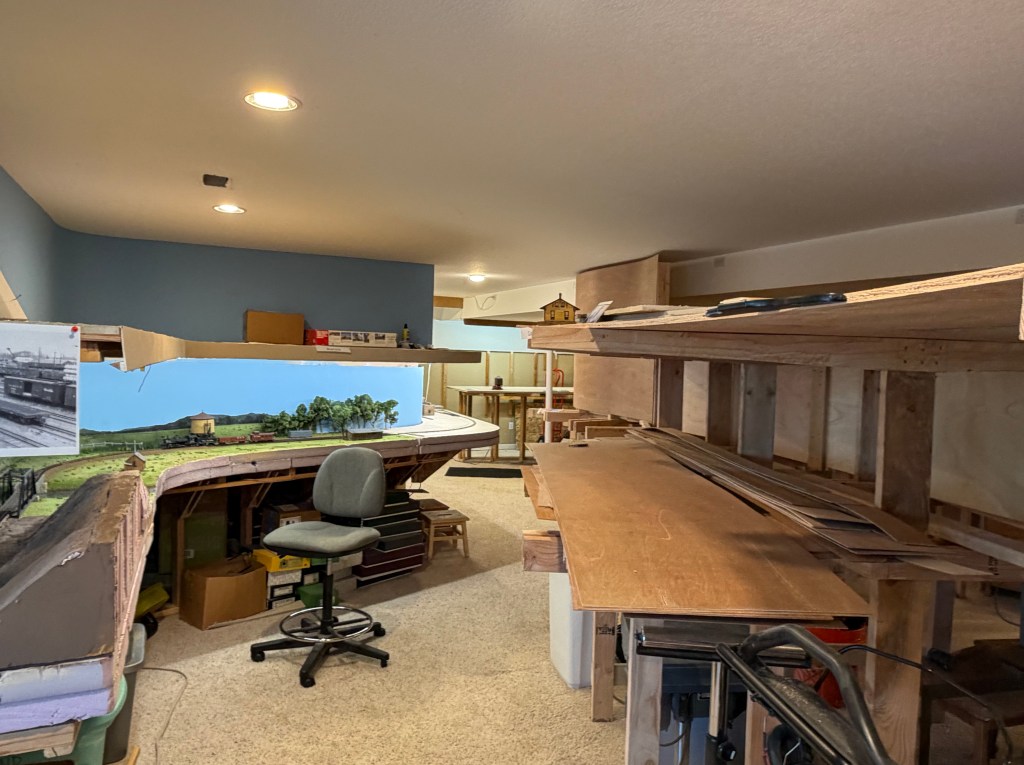
In the fall of 2023, Construction began of a section to develop and test new construction techniques. Serious construction of the layout began on December 15, 2025. Visitors will see a railroad in its early stages, with most of the double-deck benchwork already complete. The layout is primarily a shelf design that extends onto a central peninsula in an H-shaped arrangement. The 350-foot mainline will model key locations on the Denver & Rio Grande Western’s 4th Division, including Alamosa, Antonito, Sublette, Cumbres, Chama, Monero, Gato, La Boca, and Durango
Carl Averdung – Sn3 – D&RGW 4th Division
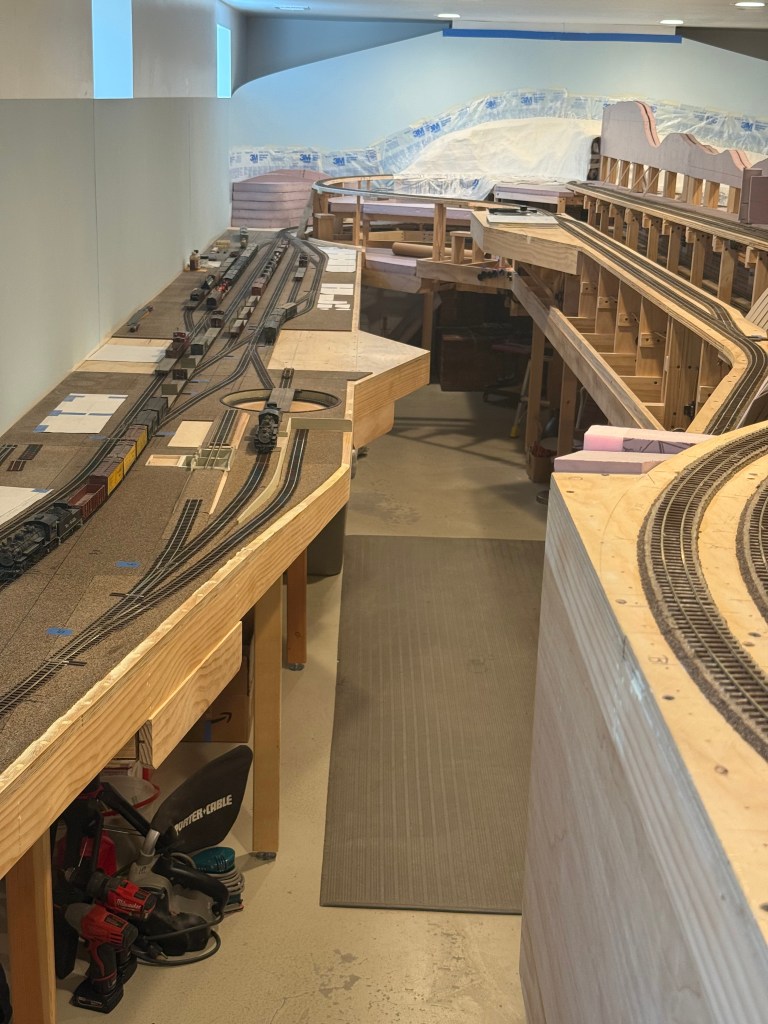
This layout is just under eight years of physical construction. Benchwork is done, trackwork is done, trains run but scenery is just starting (20% white plaster). With emphasis on D&RGW train operations to Cumbres Pass, this layout starts with the tracks in Chama yard and proceeds to Cumbres with locations such as Lobato Trestle, Cresco siding and tank, Windy Point and the yard at Cumbres. The elevation change is approximately 18 inches with a nominal grade for this portion at 2.5%. Track continues to Tanglefoot Curve, Cascade Creek Trestle, Osier, Rock and Mud Tunnels and Sublette. Trains departing Sublette go “underground” where there are storage tracks and trains make their way to, and emerge, at the west end of Chama yard.
Operationally, the layout will represent the long trains of the 1950s but fortunately, the San Juan Express is still on the schedule! Trains can operate in a continuous loop such that, for example, loaded pipe trains can always continue in their prototypical westward direction and empty pipe trains always travel in the prototypical eastward direction. Westward trains can operate with a prototypical mid-train helper to Cumbres Pass. Eastward trains can be brought from Chama to Cumbres in two or three sections, with two or three locomotives for each section (locomotives returning to Chama when desired) and then the entire train is reassembled and continues downgrade to points eastward
Gary Myers and team – HO and HOn3 – D&RGW Third Division
The Lockheed Martin Club layout features the D&RGW Third Division from Salida to Gunnison and beyond.

Art Lort – HO/HOn3 – D&RGW Gunnison Division
As featured in the February 2026 Railroad Model Craftsman. The standard gauge portion of the railroad runs between a hidden east staging yard representing Pueblo Colorado and a west staging yard representing Minturn. Leaving Pueblo, the visible portion of the standard gauge curves through a segment of the Arkansas valley and passes through Howard, an agricultural town with several industries switched by local freights. Continuing west, the standard gauge mainline enters Salida, a large dual gauge division yard. Leaving Salida, the standard gauge curves out of sight to west staging at Minturn. The narrow-gauge curves across the Arkansas River and begins the climb up the east side of Marshall Pass. Enroute the line passes Mears Junction where a branch to Alamosa leaves the mainline. Between Salida and Gunnison there are four stations with a passing track and various small industries. From Gunnison, the narrow gauge curves through the Black Canyon, Cimmaron, and into Montrose, the west narrow gauge staging yard. Normal narrow gauge traffic consists of a passenger train and a local freight in each direction. Coal, limestone and livestock are generally handled in separate trains. With a couple of exceptions, most areas of the railroad have at least basic scenery in place.
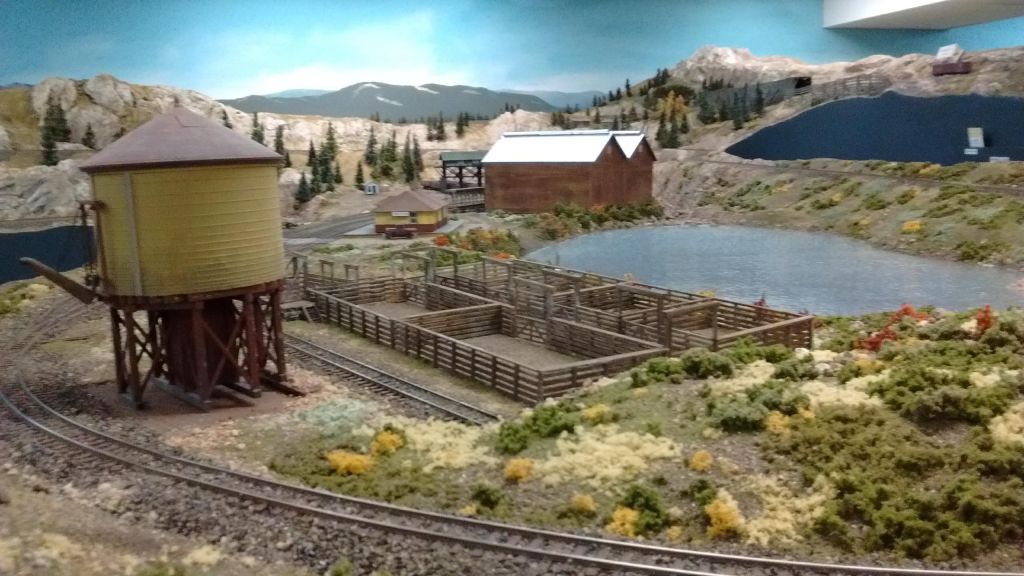
Keith Hayes – Sn3 Colorado & Southern
The layout models the Colorado & Southern ‘South Park’ between Leadville and Breckenridge over Fremont Pass during the early 1930s at the height of the molybdenum boom. It features many scratch-built structures of prototype, including the Leadville Depot. It has very good rolling stock and a forced-perspective scene.

Mark Shifter – HO – Franklin Southern Murphy Subdivision
The Franklin Southern is a multi-level walk-around layout in HO scale in a 12’x32’ basement room. This proto-freelanced road takes place on the old Southern Railway’s Murphy Branch, which ran from Asheville, NC, to Murphy, NC. It is a modern day, fictionalized version of this area, creating a bridge line from Asheville to Atlanta, GA, as well as local freight operations and a scenic excursion train. The layout represents a portion of this 114 mile line from Sylva, NC, to Murphy, NC, with a branch line from Sylva to Franklin, NC. This is an operations-oriented layout that depicts actual scenes in the Smoky Mountain region of North Carolina. There are many scratch-built and kit-bashed structures that represent present-day buildings and industries in this area.

Central Layouts
David Varney – HOn3 – The Varney SpeedLines The Varney Speedlines occupies an 8 x 24-foot space with depictions of mining in a Colorado setting. Utilizing equipment from all the famous narrow-gauge lines there is something to see for everyone.
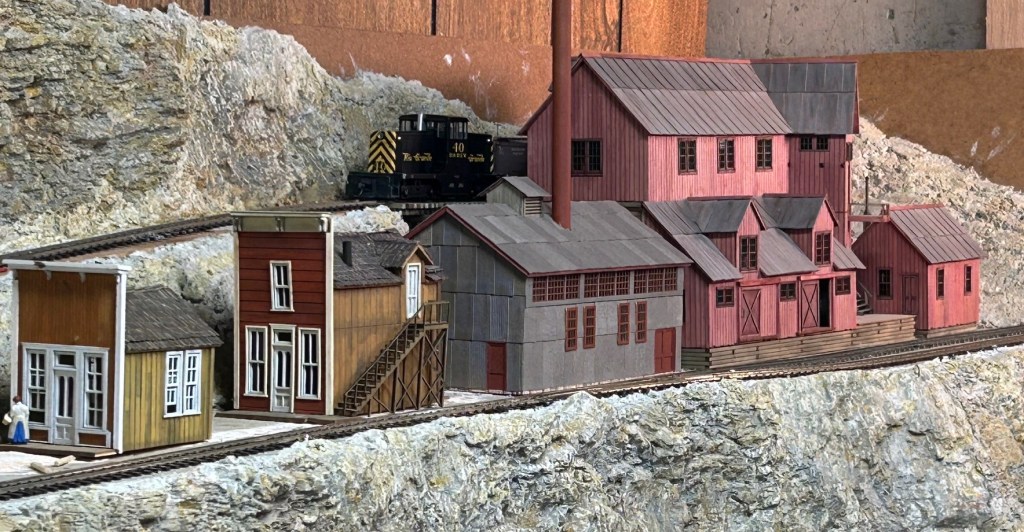
Randy Rieck – On3 – Colorado & Southern/Chalk Creek Branch After the Alpine Tunnel was closed on October 24, 1910, all service between Hancock and Quartz was discontinued. This left the east approach to Alpine Tunnel between Buena Vista and Hancock, a 22-mile-long branch line. The trains had to turn on the wye at Hancock. In August 1915, a turntable was installed at Romley to eliminate the 2.5 miles to Hancock. The operation on the Chalk Creek branch was on Monday, Wednesday and Friday. The railroad carried coal, mining supplies, cattle and household supplies inbound/ore outbound. The trains trailed a 30 ft combine to handle passengers. Only 1 locomotive at a time was on the railroad. This is a beautiful 100% completed layout. Please Note: “The layout has two large duck-under to enter the layout”.

Don Vancil – On3 – D&RGW Ridgway to Ouray
This layout depicts the town of Ouray and Ridgway Colorado in the 1940’s, featuring passenger and freight service. Future expansion will include beyond Ridgway and other RGS towns. Several On3 RGS buildings will also be on display on tables. The layout has photo backdrops, LED lighting, marine plywood fascia, foreground trees and bushes, battery power, and radio control. The benchwork is cantilevered, so there are no legs. All structures are prototypical.

Dennis Hagen – Sn3 – Wolf Creek Southern
The free-lanced Wolf Creek Southern is loosely based on the Rio Grande Southern’s Telluride Branch. Set in autumn, 1930, traffic on the line is far heavier than anything ever seen on the prototype. Designed in autumn, 1930, traffic on the line is far heavier than anything ever seen on the prototype. Designed primarily for way freight switching, the Wolf Creek Southern serves nine towns that are home to six large mines or mills and forty-six industries. Traffic follows handwritten switch lists. A full schedule includes twenty-four defined trains that feature passenger, mine service, a stock extra, and several switch jobs. A 160-mile main line runs from Derango on the south to Ute Mountain on the north, but it is represented only by a small visible staging yard at Vann’s Junction. A branch simulates a 20-mile run from Vann’s Junction to Pyrite, in reality spanning approximately 160 feet. Three extensions radiate from Pyrite much like the three short lines that once ran out of Silverton, Colorado, though in this case the Wolf Creek Southern owns all three. These extensions provide an additional 180 feet of operation. Approximately 75% of the railroad’s rolling stock and most of the completed structures are scratch built. Many industries are represented by fairly detailed mock-up structures that will stand in until replaced by something scratch built. Construction began on this double-deck layout around 2010 and has proceeded slowly in fits and starts ever since. Virtually everything on the layout was created by the owner. Despite 36-inch curves on the branch and 32-inch curves on the three extensions, the railroad still relies solely on small, C-class locomotives supported by two 10-wheelers. Operating sessions have recently begun and typically occupy five operators.

Dave Ferrier – Sn3 – Westside and Kaslo – Timber & Ore of the High-Country A dual-themed 10 x 25 Sn3 layout inspired by West Side Lumber Co. (California) and the Kaslo & Slocan Railway (British Columbia) The layout blends logging, steep mountain railroading, ore operations, and interchange traffic—all in a footprint that feels spacious and purposeful. Even though two lines were not historically connected—this layout treats them as two railroads interchanging in a single mountain region with geared loco and small rod engines through switchbacks & steep grades, short ore and log trains creates a great setting for believable operating interaction between two railroads.
Stay tuned more to come
 2026 Sn3 Symposium